




Can a Deep Well Motor be used in high - altitude areas?
 Aug 28, 2025|
 Can a Deep Well Motor be used in high - altitude areas?
As a supplier of deep well motors, a question that often comes up from our customers is whether our deep well motors can be used in high - altitude areas. This is a crucial query, as high - altitude environments present unique challenges that can impact the performance and longevity of electrical equipment, including deep well motors. In this blog, we'll explore the factors at play and provide insights to help you make an informed decision.
Understanding High - Altitude Conditions
High - altitude areas are typically defined as regions located at an elevation of more than 1,000 meters above sea level. At such heights, the atmospheric pressure is lower compared to sea - level areas. This lower pressure affects the air density, which in turn has implications for the cooling and insulation properties of electrical motors.
The air density decreases with increasing altitude. For every 1,000 meters increase in elevation, the air density can drop by approximately 10 - 12%. Since air is used as a cooling medium for motors, this reduction in air density means that the cooling capacity of the motor is diminished. As a result, the motor can run hotter during operation at high altitudes than it would at sea level.
Impact on Deep Well Motor Performance
The reduced cooling capacity due to lower air density is one of the most significant challenges for deep well motors in high - altitude areas. When a motor runs hotter, it can lead to accelerated wear and tear of its components. The insulation materials inside the motor are particularly vulnerable. High temperatures can cause the insulation to degrade more quickly, increasing the risk of electrical short - circuits and motor failure.
Another aspect to consider is the effect on the motor's power output. In some cases, the performance of the motor may be affected due to the change in air density. The motor may need to work harder to achieve the same level of performance as it would at sea level, which can also contribute to increased heat generation.
Adapting Deep Well Motors for High - Altitude Use
Despite these challenges, it is possible to use deep well motors in high - altitude areas with proper adaptations. One of the key solutions is to derate the motor. Derating involves reducing the motor's power output to compensate for the reduced cooling capacity. For example, a motor that is rated for a certain power at sea level may need to be operated at a lower power level at high altitudes to prevent overheating.
Upgrading the insulation materials is also an effective strategy. High - temperature - resistant insulation can withstand the increased heat generated by the motor in high - altitude conditions, extending the motor's lifespan and reducing the risk of electrical failures.
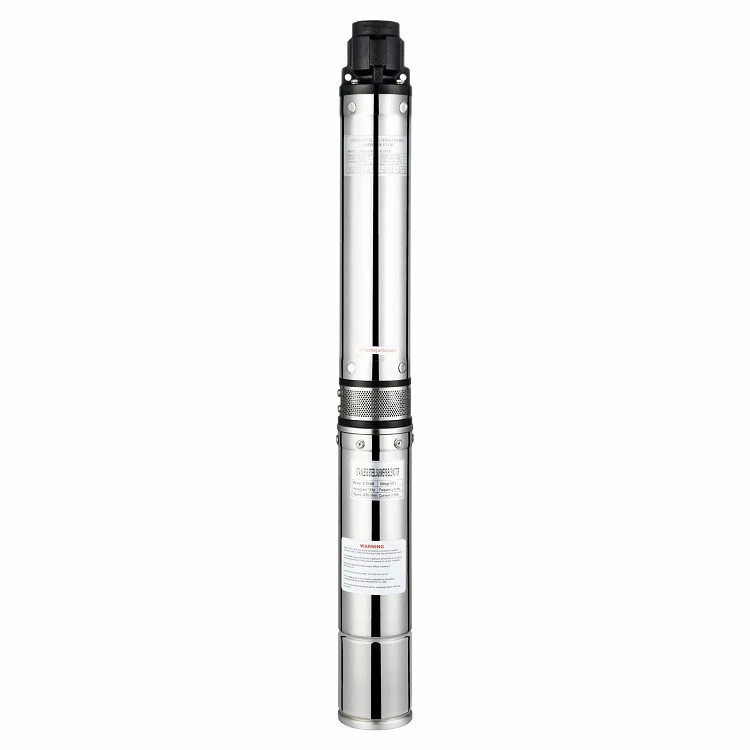
Some of our products, such as the 1.5hp Deep Well Pump and DC Submersible Deep Well Pump, can be customized to meet the specific requirements of high - altitude applications. Our Deep Well Motor is designed with high - quality materials and can be adjusted in terms of power rating and insulation to ensure reliable performance in high - altitude areas.
Case Studies and Real - World Experience
We have had several customers in high - altitude regions who have successfully used our deep well motors. In one instance, a rural community in a mountainous area at an elevation of 2,500 meters needed a reliable water supply system. They initially faced challenges with a standard deep well motor that overheated quickly. After consulting with our technical team, we provided them with a derated motor with upgraded insulation. This motor has been operating smoothly for over two years, providing a consistent water supply to the community.
Considerations for Installation and Maintenance
Proper installation is crucial when using deep well motors in high - altitude areas. The motor should be installed in a well - ventilated area to enhance the cooling effect. Additionally, regular maintenance is essential. This includes checking the motor's temperature, insulation resistance, and overall performance on a regular basis. Any signs of overheating or insulation degradation should be addressed immediately to prevent major breakdowns.

Conclusion
In conclusion, while high - altitude areas present unique challenges for deep well motors, it is entirely possible to use them effectively with the right adaptations. As a deep well motor supplier, we are committed to providing our customers with solutions that meet their specific needs, whether they are operating at sea level or in high - altitude regions.
If you are considering using a deep well motor in a high - altitude area, we encourage you to reach out to us. Our team of experts can help you select the most suitable motor for your application, customize it as needed, and provide guidance on installation and maintenance. We look forward to discussing your requirements and helping you find the best solution for your water pumping needs.
References
- "Electrical Equipment in High - Altitude Environments" - Electrical Engineering Handbook
- "Effect of Altitude on the Performance of Electric Motors" - Journal of Power Systems and Energy Research