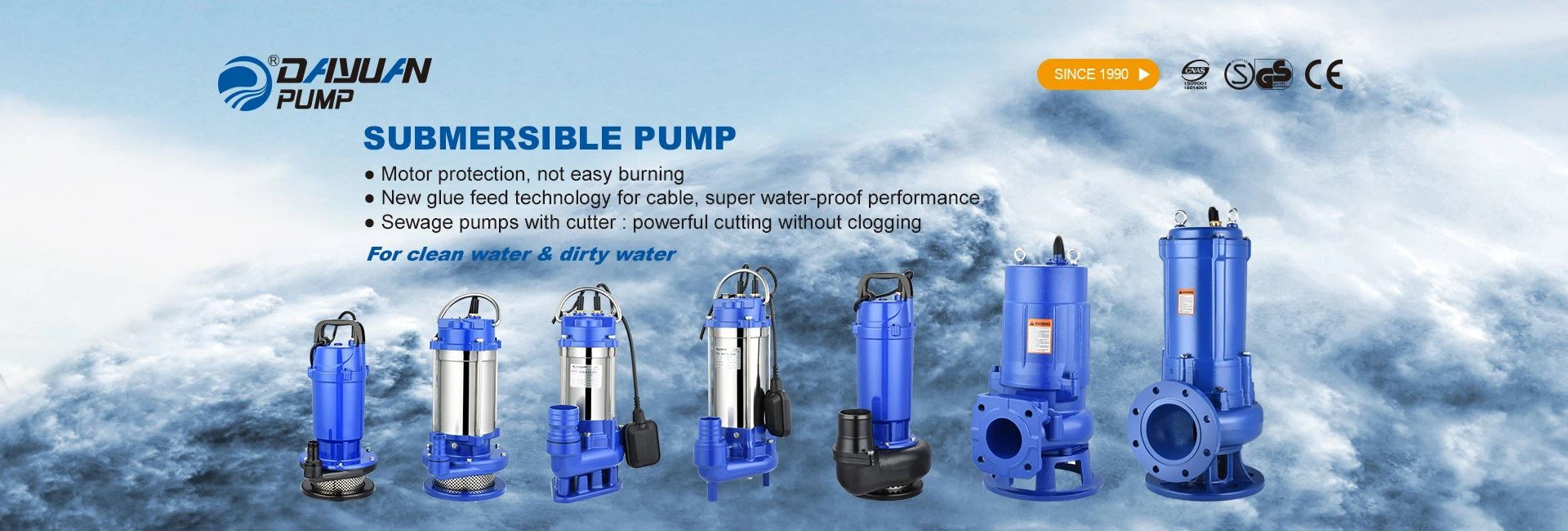
Benefits of Deep Well Pump
High Output Capacity
One of the biggest advantages of using a deep well pump is its high output capacity. This type of pump is designed to pump water from deep within the well, which means that it has the ability to pump a large volume of water in a short amount of time. This makes deep well pumps ideal for use in large households or commercial properties where a large amount of water is needed for daily use.
Long Service Life
Another advantage of deep well pumps is that they have a long service life. They are built to be durable and long-lasting, which means that you won’t have to replace them very often. This is particularly true if you choose a high-quality pump from a reputable manufacturer. When properly maintained, a deep well pump can last for several years, making it a great investment for any property owner.
Low Maintenance Requirements
In addition to their exceptional lifespan, deep well pumps also have very low maintenance requirements. They are designed to be self-contained and require very little upkeep beyond occasional inspection and cleaning. This means that you can install a deep well pump and forget about it, allowing it to do its job with little to no attention from you.
High Efficiency
Deep well pumps are also designed to be highly efficient. They are able to pump water from deep wells with ease, and they do so using very little energy. This means that you can save money on your electricity bills while still enjoying a steady supply of water. In fact, many deep well pumps are Energy Star certified, which means that they meet strict energy efficiency guidelines set by the US government.
Why Choose Us

Factory
We have there are many mature parts supply chains and experienced employees, which makes us unique.We also have a large-scale, high-quality production capacity.

Superior hygiene standards
Our products are built to meet strict hygiene standards. Their smooth surfaces and sanitary seals minimize the risk of product contamination, ensuring the integrity and safety of the fluid being processed.
Traceability
It's important to have complete traceability (the ability to track a product's history, origin, materials, and movement throughout its lifecycle) of all components, including valves.

R&D
We have a strong and experienced technical team. Since our establishment, we have been providing our customers with many unique and competitive product designs, enabling them to stand out and win in the market competition.
Pump Motor: The pump motor is responsible for converting electrical energy into mechanical energy to drive the pump’simpeller.
Pump Impeller: The impeller is a rotating component that creates the necessary centrifugal force to draw water into the pump and propel it towards the surface.
Pump Housing: The pump housing encloses the impeller and provides a passage for water to flow through. It is designed to withstand high pressures and prevent leaks.
Pump Shaft: The pump shaft connects the motor to the impeller, transmitting the rotational motion from the motor to the impeller.
Pump Seals: Seals are used to prevent water from leaking out of the pump. They ensure a tight seal between the pump housing and the pump shaft.
Pump Gaskets: Gaskets are used to create a watertight seal between different pump components, preventing any leakage.
Pump Valves: Valves control the flow of water within the pump. They allow water to enter the pump while preventing it from flowing back down the well.


How Well Pumps Work
In general, well pumps work by pushing water from a well up and into your storage tank. The water remains there until it’s needed. Using a pressure tank system, your well pump will turn on when the water reaches a certain pressure. It then moves the water from the storage tank into your home’s plumbing system. As the water in the tank is used, the air pressure inside the tank decreases, and the pump will activate again to refill it. This process continues until the well runs dry.
Shallow Well Jet Pumps
Shallow well jet pumps are typically the cheapest and simplest pump to install but have the most restrictions and a few drawbacks.Shallow well jet pumps are typically the cheapest and simplest pump to install but have the most restrictions and a few drawbacks.
Deep Well Jet Pumps
Deep well jet pumps, like shallow well jet pumps are mounted inside a well house or garage. The primary difference between the two is that the deep well jet pump uses two pipes to pull the water up from the bottom. This allows them to pull water from much deeper in the well. In theory deep well jet pumps can pull water from a maximum of 200 feet below ground.
Submersible well pumps
Submersible pumps are by far the most versatile of modern-day pumps for the average home. They take up less space because they’re installed inside of the well and are typically very quiet in comparison to its jet pump counter parts.
Deep well pump motor maintenance and its method
1.Deep well pump is a pump product that integrates the motor and the pump. ITherefore, in order to ensure the normal operation of the deep well pump unit, it is equipped with appropriate control. Protect equipment and perform standardized operations. In addition, regular inspection and maintenance work is essential.
2.First of all, the deep well pump unit should be used in a dry and clean environment. The vertical motor should be kept clean and the air duct should be kept clear. It should not be obstructed by some sundries.
3.Do not place heat around it, and avoid direct sunlight. In addition, when it is found that the motor control device has over-current protection or short-circuit protection continuously, it should be carefully checked to find the source of the problem - the motor overload or the protection device setting value is too low, find the source of the problem After that, take corresponding measures to solve it; when it is found that the anti-reverse device of the motor has lost its function, it must be repaired to remove dirt so as not to affect its normal use.
4.During the operation of the deep well pump, when some small faults occur, it is necessary to stop the inspection. At this time, it is necessary to check the oil level of the motor oil standard. When it is found that the oil level is lower than half of the oil standard, it is necessary to carry out timely After the deactivation of the vertical special motor, when stored in the warehouse, it should be stored in the original packaging, the warehouse should be kept dry and well ventilated; the temperature should be kept above 0 °C; in addition, it should be regularly Check.
Deep well pumps, also known as submersible pumps, are designed for pumping water from deep or underground water sources. The specifications of a deep well pump include:
Horsepower (HP): The horsepower of a deep well pump ranges from ½ HP to 5 HP depending on the depth of the well and the volume of water required.
Flow rate: The flow rate of a deep well pump is measured in gallons per minute (GPM). The flow rate depends on the horsepower of the pump and the size of the pump body.
Head pressure: The head pressure is the maximum height that the pump can lift or push water to. This is measured in feet or meters. The head pressure depends on the horsepower of the pump, the depth of the well, and the volume of water required.
Voltage: Most deep well pumps are powered by electricity and require a specific voltage to operate. The voltage range varies from 110V to 230V.
Casing size: The casing size of the deep well pump depends on the diameter of the well. It is important to choose a pump with a casing size that fits the well and ensures efficient water flow.
Materials: The materials used in the construction of the deep well pump are important to ensure durability and resistance to corrosion. The most common materials used are stainless steel and cast iron.
Control box: Some deep well pumps come with a control box that regulates the power supply to the pump and protects it from electrical faults. The control box can also be used to adjust the speed and pressure of the pump.
Our Factory
Over the last 30 years, we have been standing on high quality all along, It specialized in researching, manufacturing, and selling all kinds of agricultural water pumps, domestic water pumps, and engineering construction pumps.
We focus on pump R&D and manufacture in agricultural irrigation, family life, engineering construction areas. More than 2,000 product sales and service outlets are spread all over the country and exported to the United States, South Korea, Southeast Asia, Europe, Middle East and South America and other countries and regions, enjoying high reputation in European and South American markets. The products have passed CE, GS, TUV, ROHS and other certifications.

Q: 1. Can I pump too much water from my well?
Q: 2. What happens to my well pump if I lose electricity?
Q: 3. Will my well pump freeze during the winter?
Q: 4.What kinds of maintenance do I need for my well pump?
Q: 5.How long does a well pump last?
Q: 6. Do I need a water tank for water storage?
Q: 7. What is a deep well pump?
Q: 8. How does a deep well pump work?
Q: 9. How deep should I set my well pump?
Q: 10. How long does a deep well pump last?
Q: 11. Where is the well pump located?
Q: 12. How do you install a deep well pump?
Q: 13. Are there well pump parts near me?
Q: 14. How deep is a well pump?
Q: 15. How does a deep well hand pump work?
Q: 16. What are some common deep well pump parts?
Q: 17.Why does a submersible pump need a pressure tank?
Q: 18.How long do submersible well pumps last?
Q: 19.What is the stages of a submersible pump?
Q: 20.What is an open well submersible pump?
As one of the leading deep well pump suppliers in China for over 30 years, we warmly welcome you to buy cheap deep well pump in stock here from our factory. All our products are with high quality and competitive price. For pricelist, contact us now.
deep well pump pipe, deep well pump area, deep well pump wholesaler