Centrifugal Pump

What is Centrifugal Pump


A centrifugal pump is a type of pump that uses a spinning impeller to create a flow of fluid. The fluid enters the pump through the center of the impeller and is accelerated by the rotational force of the impeller.
This creates a centrifugal force, which in turn moves the fluid towards the outlet of the pump. Centrifugal pumps are commonly used in industrial, commercial, and domestic applications to pump liquids such as water, chemicals, and petroleum products. They are often preferred for their simplicity, reliability, and ease of maintenance.


BENEFITS OF CENTRIFUGAL PUM

Self Priming Shallow Well Jet Pump

High Efficiency

Centrifugal pumps are highly efficient in transferring fluid from one location to another. They can operate at a wide range of flow rates and discharge pressures to meet specific application needs.

Solar DC Well Pump

Low Maintenance

The centrifugal pump has fewer moving parts, thus it makes it easier to maintain and repair. Additionally, the design of the pump casing expedites the process of inspection and cleaning.

Self Priming Shallow Well Pump

Self-Priming

Some centrifugal pumps have the ability to self-prime, which means that they can start pumping without the need for manual priming.

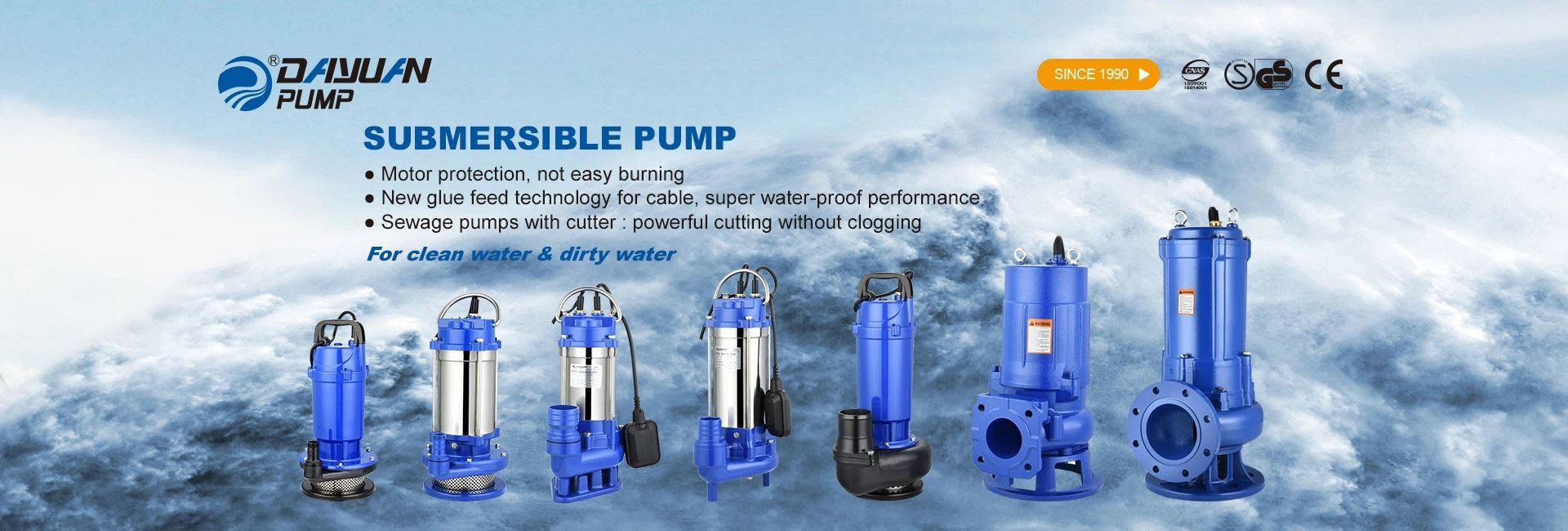
Water Lifting Submersible Pump

Energy Savings

Centrifugal pumps can be operated with variable speed drives, which enable the pump to operate at varying speeds. This can lead to significant energy savings and reduce operating costs.

Horizontal Multistage Centrifugal Pump

Easy to Install

Due to its compact design, centrifugal pumps are relatively easy to install. They require minimal space and can be installed vertically or horizontally.

Swimming Pool Motor Pump

Reliable Operation

Centrifugal pumps have a simple design which makes them very reliable. They are less prone to failure and require minimal maintenance compared to other types of pumps


Why Choose Us

24-hours online

Customized services

Quality guaranteed

Strong productivity


Primary Parts of Centrifugal Pump

Impeller

It is a rotating component mounted on a shaft that creates the centrifugal force, which propels the fluid through the pump.

Casing

It is a stationary part that houses the impeller and directs the fluid into and out of the impeller.

Shaft

It connects the motor to the impeller and transmits torque from the motor to drive the impeller.

Bearings

They support the weight of the shaft and prevent it from wobbling.

Seals

They prevent leakage of fluid from the pump.

Suction and discharge nozzles

These are the inlet and outlet ports of the pump, respectively.

Materials Used in Centrifugal Pumps


Cast iron, cast steel, stainless steel, bronze, brass, carbon structural steel composite materials, alloy steel, and non-metallic materials are some of the materials used to make centrifugal pumps.

High Head Centrifugal Pump
Micro Centrifugal Pump

Types Of Centrifugal Pumps


Centrifugal pumps are categorized based on stage, suction type, split case, shaft orientation, and standard specifications.

Applications

Centrifugal pumps are used in a wide range of applications including water supply systems, chemical processing, oil refining, mining, and many others.


Reliability and Low Maintenance Requirements 

High-quality centrifugal pumps can be counted on for continuous, long-lasting performance in a wide range of applications and industries.
They have low routine maintenance requirements. Their well-thought-out and efficient design minimizes the number of parts that require maintenance or replacement. This particular characteristic also ensures the devices come with lesser repair costs and reduced downtime.


Comparison of centrifugal and positive displacement pumps

To compare centrifugal and positive displacement pumps, it is useful to consider some key performance parameters, such as efficiency, power consumption, noise level, and reliability. Generally speaking, centrifugal pumps have higher efficiency, lower power consumption, lower noise level, and higher reliability than positive displacement pumps.
However, these parameters may vary depending on the specific design, operation, and condition of the pumps. For example, centrifugal pumps may lose efficiency when operating at low flow rates or high pressures, while positive displacement pumps may consume more power when handling viscous fluids or overcoming high resistance.


Cast iron:Gray cast iron is relatively brittle and not impact-resistant,but its chemical composition is stable,so it resists gluing,and pitting corrosion,and is not easily deformed.Chain sprockets made of this material are generally used in applications with low speed and low power


Our Factory
 

Over the last 30 years, we have been standing on high quality all along, It specialized in researching, manufacturing, and selling all kinds of agricultural water pumps, domestic water pumps, and engineering construction pumps.
We focus on pump R&D and manufacture in agricultural irrigation, family life, engineering construction areas. More than 2,000 product sales and service outlets are spread all over the country and exported to the United States, South Korea, Southeast Asia, Europe, Middle East and South America and other countries and regions, enjoying high reputation in European and South American markets. The products have passed CE, GS, TUV, ROHS and other certifications.


productcate-900-302


FAQ

Q: What is cavitation?

A: The increase velocity of the water entering a pump will cause a reduction in pressure within a unit. If this pressure falls too low, some of the water will vaporize, forming bubbles entrained in the liquid. These bubbles collapse violently as they move to areas of higher pressure creating the noise and vibration from the pump.

Q: How do you know if the pump is cavitating?

A: The pump is cavitating if knocking noises and vibrations (like pumping gravel) can be heard when it is operating. Other signs may be erratic power consumption and fluctuations or reductions in pump output.

Q: Will a centrifugal pump work if it is running backwards?

A: A centrifugal pump accelerates water off the tips of the impeller vanes. When an impeller is running backward, the centrifugal forces will still accelerate the water—although far less efficiently. A backward running pump will deliver less water, at a lower pressure, and will typically consume less electricity. If the impeller is threaded to the shaft, it may unscrew when running backwards.

Q: My pump starts and stops a lot. Will this hurt the motor?

A: Yes it will…... If you start the motor too many times, a buildup of heat can cause damage to the motor. Every time the motor starts, the inrush current of up to 10 times the nameplate amps (locked rotor code M). The motor dissipates the inrush of energy as heat.

Q:What does water hammer sound like?

A: It sounds like somebody is hitting the pipe with a sledge hammer.

Q: If I put a bigger motor on my pump, will it pump more?

A: No. The amount of water and the pressure (head) that a centrifugal pump produces is related to the rotational speed, impeller diameter and size of the impeller vanes.

Q: What is the relationship between flow low and pressure?

A: When the flow increases, the discharge pressure of the pump decreases, and when the flow decreases the discharge pressure increases

Q:Can a pump be run at zero flow for an extended period of time?

A: Do not let a centrifugal pump operate for long periods of time at zero flow. The friction of the impeller will make water will boil, the mechanical seal will “burn”, all plastic componenets will melt and water will possibly leak into the motor windings In residential systems, the pressure switch shuts the pump down when the pressure is high which means there is low or no flow.

Q: What is a centrifugal pumps minimum flow rate?

A: There is no standard which establishes precise limits for minimum flow in pumps. Most centrifugal pumps should not be used at a flow rate less than 50% of the best efficiency point. If the system requires a flow rate of 50% or less then use a recirculation line to increase the flow through the pump keeping the flow low in the system. If a pump operates at at very low flows, it could overheat badly and cause noise, vibration, cavitation and mechanical damage.

Q:Should a install pressure gauges in the system?

A: Make sure your pump has a pressure gauge on the discharge side close to the outlet of the pump this will help you diagnose pump system problems. It is also useful to have a pressure/ vacuum gauge on the suction side; the difference in pressure is proportional to the total head. The pressure gauge reading will have to be corrected for elevation since the reference plane for total head calculation is the suction flange of the pump.

Q:Can a centrifugal pump run dry?

A: Make sure that the pump is always full of liquid; most centrifugal pumps cannot run dry. In residential systems, to make sure that the pump stays full of the liquid use a check valve in line or a foot valve at the end of the suction line. Use of check valves to isolate pumps installed in parallel.

Q:What kind of isolation valves should I use?

A: Gate valves or full flow ball valves should be used as these offer no resistance to flow and can provide a tight shut-off. Butterfly valves are often used but they do provide some resistance and their presence in the flow stream can potentially be a source of hang-ups which would be critical at the suction. Butterfly valves close faster than gate valves but are not as leak proof.

Q:What kind of reducer should I use on the suction side?

A: Always use an eccentric reducer at the pump suction when a pipe size transition is required. Put the flat on top when the fluid is coming from below or straight and the flat on the bottom when the fluid is coming from the top. This will avoid an air pocket at the pump suction and allow air to be evacuated.

Q:Where do I install the isolation valve to control the pump flow?

A: If you need to control the flow, use a valve on the discharge side of the pump; never use a valve on the suction side for this purpose.

Q:Why is there air in my system?

A: Avoid pockets or high point where air can accumulate in the piping. An ideal pipe run is one where the piping gradually slopes to the suction of the pump and up from the pump discharge. This will ensure that any air in the the pump can be evacuated.

Q:What is the maximum flow point?

A: It is the point, on the right side of the curve, past which the pump may not operated. The pump will be noisy and vibrate excessively at this point. The pump will consume the maximum amount of power at this point.

Q:What are the three different types of pump curves?

A: They are normal curves, flat curves and drooping curves. In a normal curve the head decreases rapidly as flow increases. Ina flat curve the head decreases very slowly as flow increases. The drooping curve is similar to the normal curve except that the head raises then drops as it gets near to the shut-off head point.

Q: Are there any advantages to using a pump with a drooping curve?

A: The drooping curve shape is to be avoided because it is possible for the pump to hunt between two operating points which both satisfy the head requirement of the system. This is known to happen when two pumps are in parallel, when the second pump is started it may fail to get to the operating point or hunt between two points that are at equal head. Thankfully not to many pumps have this characteristic.

Q:When is a flat curve desirable?

A: Flat curve is sometimes desirable since a change in flow only causes a small change in head as in a sprinkler systems. As more sprinklers are turned on the head will tend to decrease but because the curve is flat the head will decrease only a small amount which means that the pressure at the sprinkler will drop only a small amount, thereby keeping the water velocity high at the sprinkler outlet.

Q:Are normal curves steep?

A: The normal curve can be more or less steep. A steep curve can be desirable from a control point of view since a small change in flow will result in a large pressure drop. The steepness of the curve depends on the number of vanes and the specific speed.

As one of the leading centrifugal pump suppliers in China for over 30 years, we warmly welcome you to buy cheap centrifugal pump in stock here from our factory. All our products are with high quality and competitive price. For pricelist, contact us now.

certification of surface pumps, feedback on surface pumps, inventory management of surface pumps

(0/10)

clearall