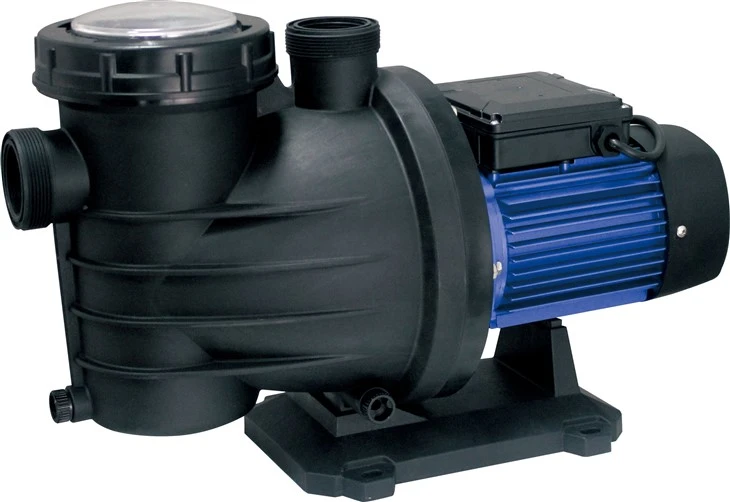
Surface Pumps

What is Surface Pumps


Surface pumps refer to pumps that are designed to be installed and operated above the water level, as opposed to submersible pumps that are installed below the water surface. They are mainly used for applications such as water supply in residential, commercial, and agricultural settings, irrigation systems, and industrial processes. Surface pumps can be powered by electricity, diesel engines, gasoline engines, or solar power depending on the application. They are available in various types including centrifugal pumps, jet pumps, and diaphragm pumps.


First 12 Last 1/2
Benefits of Surface Pumps
Standard Centrifugal Pump

Increased Efficiency

Pumps can help to increase the efficiency of a system by reducing the amount of energy required to move fluids.

Micro Vortex Pump

Improved Safety

Pumps can be used to move dangerous or toxic fluids, reducing the risk of exposure to workers.

Swimming Pool Pump DSWm550

Increased Productivity

Pumps can help to increase productivity by allowing fluids to be moved quickly and efficiently.

Jet Self Priming Pump

Cost Savings

Pumps can help to reduce costs by reducing the amount of waste and minimizing the need for manual labor.


Why Choose Us

Simply put, we provide a better pump for less. We can really save you money!
Our team brings over 100 years of collective pump experience. We promise to not only provide top quality value-added products, but also to provide outstanding customer service and stocked inventory to support short lead times.
Our pumps compete with the best in the market. We guarantee it.

Stainless Steel Horizontal Multistage Pump
Water Lifting Submersible Pump


This is how surface electric pumps work

The surface pumps can be installed under the head or above the head: in the first case they are placed at a lower level than the liquid to be withdrawn and handled, therefore the force of gravity can be exploited to make it convey inside the pump; in the second case, since the pump is at a higher level than the liquid, it must be capable of "self-priming".

Before starting, the pump body is filled with water; in this way, once put into operation, the movement of the impeller generates a strong turbulence in the internal liquid and a depression in the suction duct which causes the air to flow inside the pump. The sucked air mixes with the moving liquid contained in the pump body and being lighter it separates and is expelled from the delivery pipe. At this point the pump is primed and functions as a centrifugal pump.

In self-priming surface electric pumps the use of a non-return valve prevents emptying when the pump stops and therefore it is not necessary to fill the pump body before each start.


Applications


surface pumps can be used across a wide range of upstream, midstream, and industrial applications including

Electric Submersible Trash Pump

Injection wells

3hp Deep Well Pump

Jet pumping

WQ Submersible Pump

Surface fluid transfer

Submersible Vertical Centrifugal Pump

Pipeline boosting

AC Submersible Water Pump

High-pressure pumping

Vertical Inline Multistage Centrifugal Pump

Salt cavern leaching

Inline Circulating Pump for Water

Mine dewatering

Stainless Steel Multistage Centrifugal Pump

Geothermal stations


Uses Of Surface Pumps

Water is pumped from surface sources such as springs, ponds, tanks, and shallow wells using surface pumps. The majority of our surface pumps are diaphragm or rotary vane pumps that may be operated solar-directly for simple, low-cost operation.
Surface pumps should be installed as close to the water source as possible in dry, weatherproof sites or housings. They should not be immersed or allowed to freeze, unlike our submersible well pumps.
A surface water pump is a way to go if you need to transport surface water, such as from a pond (with a lay-flat hose). Surface water pumps should not be confused with submersible or supply booster pumps. Simple as that, surface water pumps assist in the removal of water from the surface. The best surface water pumps have a high flow rate, low power consumption, and low maintenance requirements, all while providing continuous, uninterrupted power for long periods.


Differences Between Surface Pumps & Submersible Pumps

Surface pumps and submersible pumps are two types of pumps used to move fluids from one place to another. 

Surface pumps are pumps that are installed on the surface, or above ground, and are used to draw water from a well or other water source.

Another key difference between the two types of pumps is their maintenance requirements. 

Finally, cost is another factor to consider when choosing between surface pumps and submersible pumps.

In conclusion, surface pumps and submersible pumps are two types of pumps used for different purposes.

QDX Submersible Pump


Important Pump Selection Considerations

Construction Materials

Select your pump based on the material’s ability to withstand the chemicals in the fluid composition and the surrounding environment. Common materials include bronze, cast iron, and stainless steel.

Fluid Properties

Corrosive fluids, process liquids with solids, and heated fluids each demand different material treatments and pump constructions.

Power Demands and Availability

Pumps with high horsepower levels that must tightly control the pressure of the process fluid need access to proper and reliable sources of power.

Flow Demands

Different pump mechanisms control the process fluid’s pressure. Friction, elevation, and the buildup of kinetic energy change the fluid’s pressure levels to meet the application’s needs. It’s important to select the proper pump based on its pressurizing mechanisms, the anticipated elevation or submersion of the pump, and its intended application.

 
Our Factory

Over the last 30 years, we have been standing on high quality all along, It specialized in researching, manufacturing, and selling all kinds of agricultural water pumps, domestic water pumps, and engineering construction pumps. We focus on pump R&D and manufacture in agricultural irrigation, family life, engineering construction areas. More than 2,000 product sales and service outlets are spread all over the country and exported to the United States, South Korea, Southeast Asia, Europe, Middle East and South America and other countries and regions, enjoying high reputation in European and South American markets. The products have passed CE, GS, TUV, ROHS and other certifications.


productcate-900-302


FAQ

Q: What does ‘Head’ mean?

A: The head height of a pump is the height that the pump can pump the water vertically.

Q: The head height of a pump is the height that the pump can pump the water vertically.

A: Free passage is the size of an object (in mm) that can pass through the pump without damaging or clogging it.

Q: Does the pump come with any hoses or fastening clips?

A: No, the pump comes in a box without any extras. We do supply all hoses and clips you may need separately.

Q: How do I know how quickly the pump will pump the water?

A: On each page of the pumps there is a technical specification table, on there you will see a section that says: Flow/ltr min. This tells you how many litres per minute it will pump.

Q: Submersible – Can the pump be fully submersed in water?

A: Yes, all the submersible pumps we supply can be fully submersed in water.

Q: Submersible – Can the pump sit on the ground?

A: Yes, however submersibles must be placed in water.

Q: What is a puddle pump?

A: A puddle pump can pump down to extremely low levels, as low as 1mm. These can literally be placed in large puddles to drain them.

Q: Can I submerse a puddle pump?

A: Yes, all our puddle pumps are fully submersible

Q: Can I plug the pump in to the mains and leave it turned on?

A: Yes, if the pump is 230v you can plug it in to any house mains socket. Manual pumps should be monitored and turned off when the water has pumped dry. An automatic pump will turn itself on and off automatically when the water level reaches a certain height.

Q: How heavy is the pump?

A: On each pump page there is a specification table, on this there is section that tells you the weight of each pump.

Q: Does the pump need priming?

A: Submersible pumps do not need priming as they sit in water. Our centrifugal engine driven pumps are self-priming, which refers to the pump's ability to repeatedly turn an air/water mixture into a pumpable fluid -- NOT the ability to create a vacuum (literally) out of thin air. In fact, you should never try to run a self-priming pump without water in the casing. It's dangerous and will often lead to seal failure. Engine driven diaphragm pumps are automatic priming and have excellent dry running capabilities.

Q: Can a pump run dry?

A: Some pumps can run dry and others can’t. Most pumps need the water to keep the motor cool. Please contact us if you need advice.

Q: How low will it pump the water level down to?

A: On the page for most pumps there is a technical specification table which tells you the depth of the pumping level. If not, then just give us a call and ask.

Q: Do flood and water pumps install the pump?

A: Unfortunately, we do not install the pumps as we are only the water pump retailer.

Q: How does a water pump work?

A: First of all, water is suctioned by the suction pipe of the hydraulic pump and is then driven by a electric motor that rotates the impeller’s paddels. Paddles make the water enter through the center of the rotor with a large centrifugal force due to the compression of the liquid. From here comes the next pressure that causes the fluid to flow quickly and with more flow rate.

Q: Which pump is the best?

A: Most pumps have similar features, but they’re all a little different. No one pump is best.

Q: What is the difference between a submersible pump and a surface mounted pump?

A: There are two main categories of water pumps, submersible and surface mounted. Submersible pumps are installed under the water while surface pumps are mounted out of the water. Submersibles are usually installed below the water level in a well but can be installed in a lake, cistern or river. Surface pumps are usually mounted above the water level which requires a suction lift, the distance between the water level and the inlet of the pump. However if a water storage tank is used the water level could be above the pump creating a positive suction head.

Q: Why has my pump stopped working?

A: Check the impeller – if there are strands of pondweed in the pump, this may stop the impeller from turning correctly. Check the electricity supply i.e. the fuse, or connect to an alternative power supply. If the unit still fails to operate and it is within the guarantee period, you should return it to your retailer who will be able to assist you further.

Q: What is the lifespan of this pump?

A: Generally, the lifespan of this water pump can be about 5 to 15 years.

Q: How Does The Sun Power A Pump?

A: The process begins with the photo voltaic effect producing a flow of electrons. These electrons are excited by particles of light & find the attached electrical circuit the easiest path to travel from one side of the solar cell to the other. Envision a piece of metal such as the side panel of a car. As it sits in the sun, the metal warms. This warming is caused by the exciting electrons, bouncing back and forth, creating friction & therefore, heat. The solar cell merely takes a percentage of these electrons & directs them to flow in a path. This flow of electrons is, by definition, electricity.

As one of the leading surface pumps suppliers in China for over 30 years, we warmly welcome you to buy cheap surface pumps in stock here from our factory. All our products are with high quality and competitive price. For pricelist, contact us now.

(0/10)

clearall