Commercial Pump

What is Commercial Pump


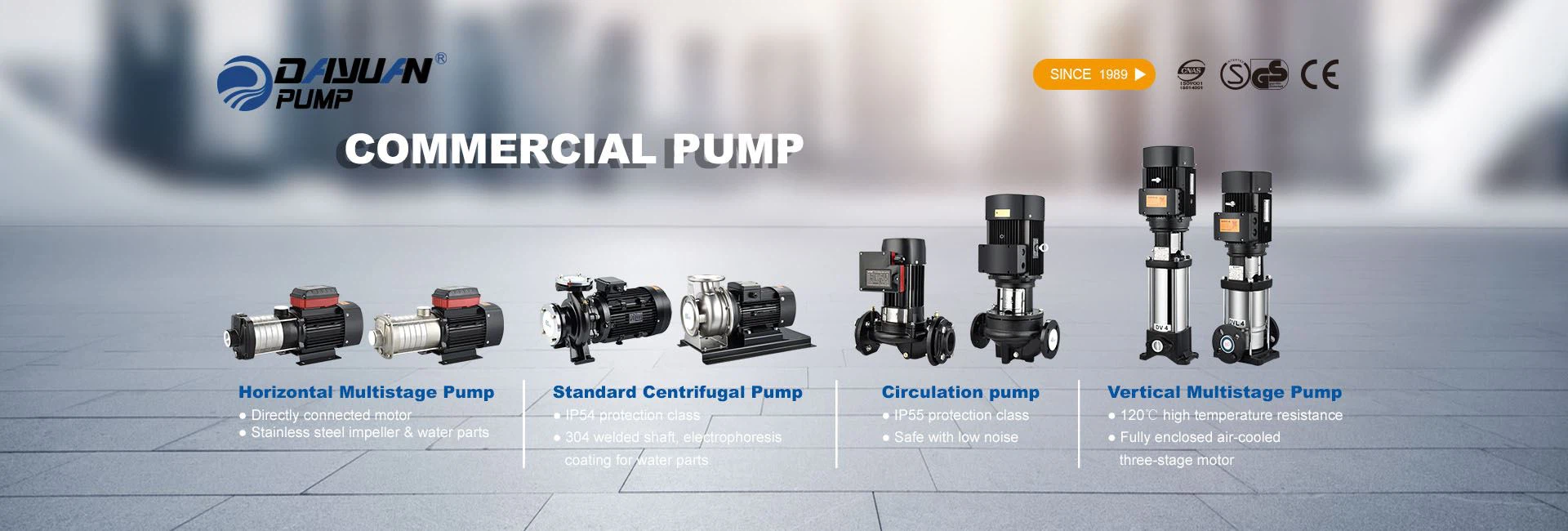
Commercial pumps can handle a variety of liquids from potable water to industrial liquids within a very wide temperature, flow and pressure scale. Each pump can be fitted for your special water type by one of our technical engineers making sure you get the right pump for the job.

Benefits Of Commercial Pump

Increased Efficiency

Commercial pumps are designed to be highly efficient, allowing for greater water flow and faster pumping rates. This translates into reduced operating costs and decreased maintenance requirements.

Improved Performance

With commercial pumps, businesses can better control their water usage and distribution. This, in turn, allows for improved production processes, reduced downtime, and improved overall performance.

Reduced Labor Costs

Commercial pumps require less labor to operate and maintain than traditional water distribution systems. This leads to reduced labor costs and increased productivity.

Increased Safety

Commercial pumps are typically equipped with features that enhance safety, such as automatic shutoff valves and overpressure protection devices. This ensures the safe and reliable distribution of water throughout the facility.


Why Choose Us


modular-1


01

Wide range of pump types

The company offers a wide range of pumps that can meet different requirements and applications.
- High-quality products: Zhejiang Dayuan Pumps Industrial Co., Ltd uses high-quality materials and advanced technology to produce durable and efficient pumps.

modular-2


02

Competitive prices

The company offers competitive prices for its products without compromising on quality.

modular-3


03

Customization

Zhejiang Dayuan Pumps Industrial Co., Ltd can customize pumps according to customers' requirements and specifications.

modular-4


04

Excellent customer service

The company provides excellent customer service and support to ensure customer satisfaction.


Performance Features
Light Vertical Multistage Centrifugal Pump

Adjustable speed - Pump which operates at speeds which can be selected by an operator

Continuous duty - Pump which is rated to run continuously; it can maintain performance specifications at 100% duty cycle.

Grinding mechanism - Pump has integral grinding mechanisms in the suction port to grind garbage, sewage, rubber goods, etc. to very small pieces and transfer themunder pressure. Pumps with this feature are often referred to as grinder pumps.

Non-clog - Pump is configured to pump viscous, sticky, or stringy materials that would clog other types of pumps.

Run dry capable - Pump can operate with no pumped fluid or external lubrication for an extended period of time without damaging the equipment or system.

Submersible- Pump can be mounted into a tank or reservoir with the liquid media. The pump's motor is normally sealed in an oil filled cavity that isprotected from contact with the liquid.

Top suction - Pump is capable of drawing fluid from the top of a tank rather than from the bottom of a reservoir.


Materials


Corrosion resistant - Pump is constructed from corrosion resistant materials, such as stainless steel, for withstanding chemical attack or corrosion from the environment or pumping media.

Hygienic - Pump is constructed from hygienic materials, and is fully sealed to eliminate leakage and contamination of pumped materials.

Plastic - Pump is designed to move fluids that would corrode or damage other types of pumps. They provide a broad chemical resistance and are less costly and lighter weight than metal pumps.

Sanitary - Pump is used to transport food and agricultural materials in operations such as food processing that require cleanliness. Sanitary pumps arespecifically designed to meet strict guidelines established for sanitary process applications, including FDA, USDA, and 3-A.

Washdown - Pump is designed to perform better in wet environments, including food processing plants and dairies as well as other high humidity areas.

直列式水循环泵


轻型立式多级离心泵

Markets/Applications Served


Agriculture. Pumps used in the agricultural sector are used to hydrate animals, facilitate irrigation, move mud, pressure wash animal casings, and more.

Construction. Construction operations rely on a variety of pumps to mitigate flood risk, maintain construction sites and provide pressurized water for cleaning.

Engines. Gas engines rely on internal pumps to move fuel for combustion.

Fire suppression. Pumps are critical to maintaining pressurized water in emergency fire suppression systems. Fire engines also use pumps to pump water from the municipal system through fire hydrants.

Flood control. Industrial sump pumps and other submersible pumps are critical to preventing flooding in industrial and commercial buildings.

Industrial. Pumps are used in a wide range of industrial applications, such as moving process chemicals, supporting manufacturing processes, feeding boilers, pressurization, filtration and many other tasks.

Municipal. Complex municipal water systems rely heavily on equally complex pump systems to maintain water pressure throughout the water supply network. Sewage and waste. Pumps facilitate the movement of a wide variety of liquid and solid wastes.


Applications

Commercial pumps have a far greater breadth of applications by virtue of the fact there are so many industries where they can be used.

Commercial or industrial pumps can be used to move water and wastewater, chemicals, oil, petroleum, food, sludges, and slurries.

They also form an integral part of commercial heating and cooling systems where liquid must be moved up and down office buildings potentially hundreds of metres tall. This liquid captures the temperature of the unwanted air - hot or cold - and disperses it from the rooftop or basement. With a powerful pump, air conditioning would not be possible.

Domestic pumps take care of far simpler, but equally integral operations. This can include moving water from an underground tank, sewerage disposal, and to simply boost mains water pressure for showers, sinks etc.

Without domestic pumps, the supply of water for basic tasks like washing dishes and water plants would be far more difficult - yet many people wouldn't be aware of the part they play in the home.

卧式水泵


Selection Considerations

1. Material of construction

Choose a pump based on the material’s ability to withstand the fluid composition and chemicals in the surrounding environment. Common materials include bronze, cast iron and stainless steel. Different applications may also require pumps that meet strict regulatory standards.

2. Fluid properties

Corrosive fluids, process fluids containing solids and heating fluids all require different material handling and pump construction. Pay careful attention to process fluid properties that may reduce pump performance or put pressure on the pump to ensure selection of the appropriate model.

3. Power requirements and availability

High horsepower pumps that must tightly control process fluid pressure require the use of an appropriate and reliable power supply. Many pumps are available in electric and pneumatic types for installation environments and mobile applications, such as agriculture and construction sites. In addition to considering the power supply, the appropriate pump must be selected based on any voltage or current limitations.

4. Flow requirements

Different pump mechanisms control the pressure of the process fluid. Friction, height and kinetic energy build-up can change the pressure level of the fluid to meet the needs of the application. It is important to select the right pump based on its pressurization mechanism, the expected height or submersion of the pump and its intended application.


Our Factory


Over the last 30 years, we have been standing on high quality all along, It specialized in researching, manufacturing, and selling all kinds of agricultural water pumps, domestic water pumps, and engineering construction pumps. We focus on pump R&D and manufacture in.


productcate-900-302

FAQ


Q: What are the uses of a water pump?

A: A water pump is useful for a variety of residential, agricultural and commercial tasks. A water pump is used for: ,
- Draining water from the basement
- Draining and filling the swimming pool or pond
- Draining flooded areas
- Irrigating farm fields
- Construction purposes

Q: What is the difference between a pump and motor?

A: While a pump is used to transfer fluid using pressure, a motor is an electro-mechanical machine that is used to transform electrical energy to mechanical energy.

Q: Where are pumps used?

A: Pumps are used for supplying water, for cooling, heating and air-conditioning; for gardening and irrigation, and also to cool industrial plants.

Q: How do you select a pump and a motor?

A: Select a pump and a motor depending upon the application. While selecting a pump and motor, you need to keep the following four things in mind: Your desire flow rate
Suction lift
Pressure against which the pump will operate
Type of fluid which the motors are designed to handle

Q: What are the different types of pumps?

A: There are two types of pumps:
Centrifugal Pump: These pumps are used to move fluid by transferring rotational energy from one or more driven rotors, called impellers.
Peripheral Pumps: These are a type of centrifugal pump, whose impeller rotates in a casing channel with the liquid flowing between the vanes. The casing transmits large amounts of energy and thus, increasing the pressure within the pump.

Q: How do I select the right water pump?

A: It all depends on how much water you need to pump, how quickly you need to pump it, and how dirty the water is. A pump’s performance is determined by many factors such as atmospheric pressure (how high the pump is above sea level) resistance from hoses, etc. A pump’s performance is measured in flow and expressed in gallons per minute or gallons per hour. The higher the flow, the better the performance. If the water is sandy, muddy (abrasive), or has small particulates, you should purchase a semi-trash or trash pump. If the water you intend to pump is always clean, such as in a swimming pool, hot tub, or water garden, a clean water pump will be fine.

Q: Do the water pumps have to be maintained?

A: All water pumps require periodic maintenance, such as oil changes to ensure maximum performance for years of reliable service.

Q: What type of oil should I use in my water pump?

A: An SAE rated high detergent oil that meets API Service Class SF requirements for gasoline engines, similar to your car.

Q: How do I store my water pump for the winter?

A: Long-term storage is important, especially in the winter. Be sure to allow the pump and hoses to fully dry out prior to storage.

Q: Can I pump hot water with my water pump?

A: No, water must be no more than 100°F. Hot water can cause permanent damage to the pump.

Q:Can I pump bleach with my water pump?

A: No, bleach can cause permanent damage to the pump and hoses.

Q: Are centrifugal pumps variable speed?

A: Most centrifugal pumps do not have variable speed motors. However, you can control flow rate on the discharge using a valve.

Q:What exactly is a positive displacement pump?

A:  positive displacement pump emits a given volume of fluid for each revolution of the motor. Bellows, double-diaphragm, flexible impeller, gear, oscillating, piston, progressing cavity, rotary lobe, rotary vane, and peristaltic pumps are all positive displacement pumps.

Q:Which pumps can I run dry?

A: Peristaltic, piston pumps with ceramic heads, bellows pumps, and diaphragm pumps can be run dry for any length of time. Centrifugal, rotary vane, and gear pumps should not be run dry; exceptions are if the gear or impeller is made of a self-lubricating material such as RYTON in which case the pump can be run for a few minutes while priming.

Q: What is the maximum viscosity rating for pumps?

A: Peristaltic, piston pumps with ceramic heads, bellows pumps, and diaphragm pumps can be run dry for any length of time. Centrifugal, rotary vane, and gear pumps should not be run dry; exceptions are if the gear or impeller is made of a self-lubricating material such as RYTON in which case the pump can be run for a few minutes while priming.

Q:When do you need to perform maintenance on pumps?

A: This depends on the pump and the application. In general, diaphragms on metering pumps last about 6 to 12 months; gears on gear pumps last about 3 to 6 months; and motors usually last for years. DC motors require periodic brush replacement. It is important to monitor brush wear; normally brushes should be replaced every 6 months.

Q:What kind of applications is the commercial / industrial heat pump suitable for?

A: Any kind of business that requires heating or cooling at a medium to large scale can benefit from installing a commercial geothermal heat pump. The higher the demand for heating and / or cooling, the greater the financial return on a heat pump investment. Fantastic results have been achieved for hotels, gyms, spas / wellness centers and swimming pools, hospitals, educational facilities, restaurants, shopping malls, office buildings, housing, heavy and light industries, manufacturing, warehousing, wineries, pharmaceutics, food processing and distribution and energy intense operations.

Q:My pump starts and stops a lot. Will this hurt the motor?

A: It might. Every time the motor starts, the windings see a high inrush current of up to about 10 times the nameplate amps (locked rotor code M). The motor dissipates the inrush of energy as heat. If you start the motor too many times, a build up of heat can cause damage to the motor.

Q:Why won’t my pump prime?

A: The pump is likely not being fed properly or there could also be Net Positive Suction Head (NPSH) issue related to the temperature or type of fluid. Unless the pump you have is a “self priming” pump, it will not prime unless the pump is full of water and there is no air trapped inside locking the pump.

Q:LF I put a higher speed motor on my centrifugal pump, will it pump more?

A: It will pump more, but it will likely overload the motor. If you double the rotational speed of the motor from 1200 RPM to 3600 RPM, the horsepower required by a centrifugal pump actually increases by a factor of eight. Increasing the pump speed may also pressurize the pump beyond a safe working pressure and overload the shaft and bearings. Increasing the impeller is another option. Your pump technician can review your application and make appropriate recommendations.


As one of the leading commercial pump suppliers in China for over 30 years, we warmly welcome you to buy cheap commercial pump in stock here from our factory. All our products are with high quality and competitive price. For pricelist, contact us now.

Vertical single stage centrifugal pump, mud circulation pump, 12v heating circulation pump

(0/10)

clearall