




What is the installation height limit for a vertical pump?
 Dec 08, 2025|
When it comes to the installation of vertical pumps, one of the most frequently asked questions is about the installation height limit. As a professional vertical pump supplier, I am here to provide a comprehensive and in - depth analysis of this crucial topic.
Understanding the Basics of Vertical Pumps
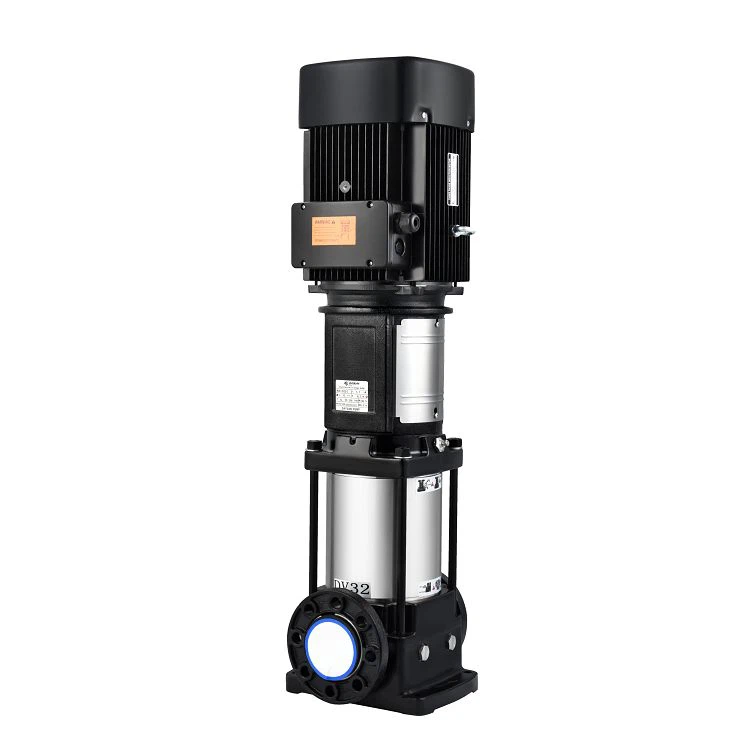
Before delving into the installation height limit, it is essential to understand what vertical pumps are. Vertical pumps are a type of centrifugal pump that has a vertical shaft configuration. They are widely used in various industries, such as water supply, wastewater treatment, and industrial process applications. Our company offers a diverse range of vertical pumps, including the Light Vertical Multistage Centrifugal Pump, Stainless Steel Multistage Centrifugal Pump, and Vertical Inline Multistage Centrifugal Pump. Each type is designed to meet specific requirements and operating conditions.
Factors Affecting the Installation Height Limit
The installation height limit of a vertical pump is not a fixed value; instead, it is determined by several factors.
1. NPSH (Net Positive Suction Head) Requirements
NPSH is a critical parameter in pump operation. It represents the difference between the absolute pressure at the pump inlet and the vapor pressure of the liquid being pumped. The pump must have sufficient NPSH available to prevent cavitation. Cavitation occurs when the pressure at the pump inlet drops below the vapor pressure of the liquid, causing the formation and subsequent collapse of vapor bubbles. This can lead to significant damage to the pump impeller and other components, reducing the pump's efficiency and lifespan.
The available NPSH is affected by the elevation of the liquid source relative to the pump inlet, the friction losses in the suction piping, and the vapor pressure of the liquid. As the installation height of the pump increases, the available NPSH decreases. Therefore, the maximum installation height is limited by the NPSH requirements of the pump. Different pump models have different NPSH requirements, which are usually specified by the pump manufacturer in the pump performance curves.
2. Pump Design and Performance
The design and performance of the pump itself also play a crucial role in determining the installation height limit. For example, the impeller design, the number of stages in a multistage pump, and the pump's efficiency all affect how well the pump can handle the suction lift. Multistage pumps, which have multiple impellers in series, can generally generate higher pressures and handle greater suction lifts compared to single - stage pumps.
Our Stainless Steel Multistage Centrifugal Pump is designed with high - efficiency impellers and multiple stages, allowing it to operate effectively at relatively high installation heights. The pump's performance curves provide detailed information about its head - flow characteristics, which can be used to determine the maximum installation height under specific operating conditions.
3. Liquid Properties
The properties of the liquid being pumped, such as density, viscosity, and vapor pressure, also impact the installation height limit. Liquids with higher vapor pressures require more NPSH to prevent cavitation, which in turn limits the maximum installation height. For example, hot water has a higher vapor pressure than cold water, so the installation height of a pump used to pump hot water will be more restricted compared to a pump used for cold water.
Viscous liquids can also cause additional friction losses in the suction piping, reducing the available NPSH. Therefore, pumps handling viscous liquids may have lower installation height limits.
4. Suction Piping Design
The design of the suction piping, including the diameter, length, and number of fittings, affects the friction losses in the piping. Longer and smaller - diameter pipes with more fittings will have higher friction losses, reducing the available NPSH at the pump inlet. To minimize friction losses, it is recommended to use larger - diameter pipes and fewer fittings in the suction piping system.
Calculating the Installation Height Limit
To calculate the maximum installation height of a vertical pump, the following steps can be followed:
-
Determine the NPSH Required (NPSHr): Refer to the pump performance curves provided by the manufacturer to find the NPSH required for the desired flow rate.
-
Calculate the Available NPSH (NPSHa): The available NPSH can be calculated using the following formula:
(NPSHa = P_{atm}/\rho g+h - h_f - P_v/\rho g)

where (P_{atm}) is the atmospheric pressure, (\rho) is the density of the liquid, (g) is the acceleration due to gravity, (h) is the elevation of the liquid source above the pump inlet, (h_f) is the friction loss in the suction piping, and (P_v) is the vapor pressure of the liquid.
-
Set NPSHa = NPSHr: Solve the equation for (h) to find the maximum installation height.
It should be noted that this calculation is a simplified approach, and in practice, other factors such as the dynamic effects and safety margins should also be considered.
Practical Considerations for Installation
When installing a vertical pump, it is important to follow some practical guidelines to ensure the pump operates within its installation height limit and performs optimally.
- Site Inspection: Conduct a thorough site inspection to assess the elevation of the liquid source, the available space for the pump installation, and the condition of the suction piping route.
- Piping Installation: Install the suction piping with a proper slope to prevent air pockets from forming. Use high - quality pipes and fittings to minimize friction losses.
- Monitoring and Maintenance: Regularly monitor the pump's performance, including the suction pressure, discharge pressure, and flow rate. Conduct preventive maintenance to ensure the pump components are in good condition and to detect any potential problems early.
Conclusion
In conclusion, the installation height limit of a vertical pump is a complex issue that is influenced by multiple factors, including NPSH requirements, pump design, liquid properties, and suction piping design. As a professional vertical pump supplier, we understand the importance of these factors and can provide our customers with detailed technical support and guidance to ensure the proper installation and operation of our pumps.
If you are considering purchasing a vertical pump for your application and need to determine the appropriate installation height, or if you have any other questions about our Light Vertical Multistage Centrifugal Pump, Stainless Steel Multistage Centrifugal Pump, or Vertical Inline Multistage Centrifugal Pump, please feel free to contact us. Our experienced sales and technical teams are ready to assist you in making the right choice and ensuring a successful installation.
References
- Pump Handbook, Karassik, I. J., Messina, J. P., Cooper, P. E., & Heald, C. C.
- Centrifugal Pumps: Design and Application, Stepanoff, A. J.