




What is the speed of a Deep Well Motor?
 Dec 04, 2025|
Hey there! As a supplier of Deep Well Motors, I often get asked about the speed of these motors. So, I thought I'd write this blog to share some insights on what the speed of a Deep Well Motor actually means and how it impacts its performance.
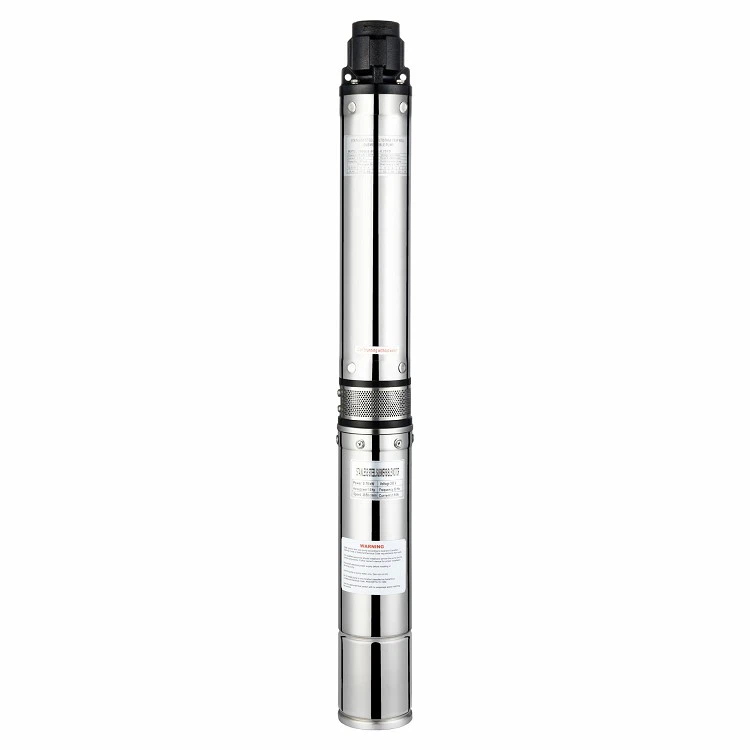
First off, let's talk about what a Deep Well Motor is. A Deep Well Motor is a crucial component of a deep - well pumping system. It's designed to operate underwater, deep within a well, to pump water up to the surface. These motors are used in a variety of applications, from residential water supply to agricultural irrigation and industrial processes.
Now, the speed of a Deep Well Motor is typically measured in revolutions per minute (RPM). The RPM of a motor is a key factor that determines how fast the motor can spin and, in turn, how much water it can pump. Most standard Deep Well Motors have a speed of around 3450 RPM when operating on a 60 - hertz power supply. This is because, in a 60 - hertz electrical system, the alternating current changes direction 60 times per second, which results in a motor speed close to 3450 RPM for a two - pole motor.
But why is this speed important? Well, the speed of the motor directly affects the pump's flow rate and head pressure. The flow rate is the amount of water that the pump can move in a given period, usually measured in gallons per minute (GPM). A higher RPM generally means a higher flow rate, as the motor can spin the impeller of the pump faster, pushing more water through the system.
On the other hand, head pressure is the force that the pump needs to overcome to push water up to the surface. It's affected by factors like the depth of the well and the height to which the water needs to be pumped. A motor with a higher speed can generate more pressure, allowing it to pump water from deeper wells or to greater heights.
However, it's not always the case that a higher speed is better. There are trade - offs to consider. A motor running at a very high speed may consume more energy, which can lead to higher electricity bills. It may also experience more wear and tear over time, reducing its lifespan. So, when choosing a Deep Well Motor, it's important to find the right balance between speed, flow rate, head pressure, and energy efficiency.
Let's take a look at some of the products we offer. We have a 3hp Deep Well Pump that is powered by a high - quality Deep Well Motor. This pump is designed for medium - to large - scale applications, where a relatively high flow rate and head pressure are required. The motor in this pump runs at an optimal speed that provides a good balance between performance and energy consumption.
If you have a smaller well or a less demanding application, our 1.5hp Deep Well Pump might be a better fit. The motor in this pump operates at a lower speed, which is sufficient for pumping water from shallower wells or for supplying water to a single - family home.
Of course, all our Deep Well Motors are built to the highest standards of quality and reliability. You can find more information about our Deep Well Motor on our website.
In addition to the standard speed motors, we also offer variable - speed Deep Well Motors. These motors allow you to adjust the speed according to your specific needs. For example, if you only need a small amount of water during off - peak hours, you can reduce the motor speed to save energy. When you need more water, you can increase the speed to meet the demand.
Variable - speed motors are also great for protecting the pump and the motor from damage. They can gradually ramp up or down the speed, reducing the stress on the components and extending their lifespan. This is especially important in applications where the water demand fluctuates frequently.
Another factor that can affect the speed of a Deep Well Motor is the load on the pump. If the pump is pumping water against a high head pressure or if there is a blockage in the system, the motor may slow down. This is a natural response of the motor to the increased resistance. In some cases, if the load is too high, the motor may even overheat and shut down to prevent damage.
To ensure that your Deep Well Motor operates at its optimal speed, it's important to maintain the pump and the motor properly. This includes regular inspections, cleaning, and lubrication. You should also check the electrical connections to make sure they are secure and that the voltage is within the recommended range.
If you're having trouble with the speed of your Deep Well Motor or if you're not sure which motor is right for your application, don't hesitate to reach out to us. We have a team of experts who can provide you with personalized advice and guidance.
In conclusion, the speed of a Deep Well Motor is a critical factor that affects its performance, energy consumption, and lifespan. Whether you need a high - speed motor for a large - scale application or a lower - speed motor for a small - scale project, we have the right solution for you.
If you're interested in purchasing a Deep Well Motor or have any questions about our products, we'd love to hear from you. Contact us to start a discussion about your specific requirements and let's find the perfect Deep Well Motor for you.
References

- "Pump Handbook" by Igor J. Karassik et al.
- Industry standards and guidelines for deep - well pumping systems.