




How to measure the flow rate of a vertical pump?
 Jul 15, 2025|
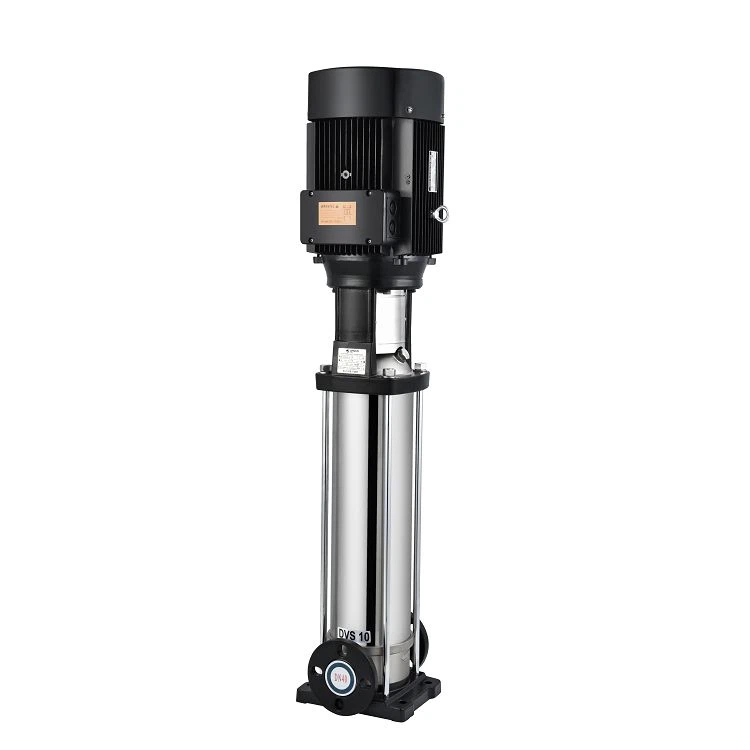
 Hey there! As a supplier of vertical pumps, I often get asked about how to measure the flow rate of a vertical pump. It's a crucial aspect, whether you're using a Vertical Inline Multistage Centrifugal Pump, a Stainless Steel Multistage Centrifugal Pump, or a Light Vertical Multistage Centrifugal Pump. So, let's dive right in and explore the different methods to measure the flow rate of these pumps.
Why Measuring Flow Rate Matters
First off, why do we even bother measuring the flow rate? Well, it's super important for a bunch of reasons. For one, it helps in evaluating the performance of the pump. You want to know if your pump is working as efficiently as it should be. If the flow rate is too low, it might mean there's an issue with the pump, like a clog or a worn - out part. On the other hand, if it's too high, it could be wasting energy and causing unnecessary wear and tear on the pump.
It's also essential for process control. In many industrial applications, the right flow rate is critical for the entire process to work properly. For example, in a water treatment plant, the correct flow rate of water through different treatment stages is necessary to ensure the water is properly treated.
Methods to Measure Flow Rate
1. Volumetric Method
The volumetric method is one of the simplest ways to measure the flow rate. All you need is a container with known volume and a stopwatch. Here's how it works:
- First, you direct the output of the vertical pump into the container. Start the stopwatch as soon as you start filling the container.
- Keep filling the container until it's full. Then, stop the stopwatch.
- The flow rate (Q) can be calculated using the formula Q = V / t, where V is the volume of the container and t is the time it took to fill the container. For example, if your container has a volume of 1 cubic meter and it took 60 seconds to fill it, the flow rate is 1 m³ / 60 s = 0.0167 m³/s.
The advantage of this method is its simplicity. You don't need any fancy equipment. However, it's not very practical for continuous measurements or for large - scale applications. It's more suitable for small - scale testing and getting a rough estimate of the flow rate.
2. Orifice Plate Method
The orifice plate method is a bit more sophisticated. An orifice plate is a thin plate with a hole in the middle. It's installed in the pipeline through which the pump is discharging the fluid.
- As the fluid passes through the orifice, there's a pressure drop across the plate. The pressure drop is related to the flow rate. You can measure the pressure drop using pressure sensors on either side of the orifice plate.
- The flow rate can be calculated using the Bernoulli's equation and some coefficients that depend on the properties of the orifice plate and the fluid. The general formula for the flow rate through an orifice plate is Q = C * A * √(2ΔP / ρ), where C is the discharge coefficient, A is the area of the orifice, ΔP is the pressure drop across the orifice, and ρ is the density of the fluid.
The orifice plate method is widely used in industrial applications because it can provide relatively accurate measurements. But it has some drawbacks. The orifice plate can cause a significant pressure loss in the pipeline, which might affect the performance of the pump. Also, the installation and calibration of the orifice plate and pressure sensors can be a bit tricky.
3. Magnetic Flow Meter
Magnetic flow meters, also known as mag meters, are a popular choice for measuring the flow rate of conductive fluids, like water.
- The principle behind a magnetic flow meter is based on Faraday's law of electromagnetic induction. When a conductive fluid flows through a magnetic field created by the meter, an electromotive force (EMF) is induced.
- The magnitude of the induced EMF is proportional to the flow rate of the fluid. The meter measures this EMF and converts it into a flow rate reading.
- One of the great things about magnetic flow meters is that they have no moving parts. This means there's less wear and tear, and they're very reliable. They also don't cause any significant pressure drop in the pipeline. However, they can be quite expensive, and they only work with conductive fluids.
4. Ultrasonic Flow Meter
Ultrasonic flow meters are another option. There are two main types: transit - time and Doppler.
- Transit - time ultrasonic flow meters work by sending ultrasonic signals in the direction of the fluid flow and against the fluid flow. The difference in the time it takes for the signals to travel in the two directions is related to the flow rate of the fluid.
- Doppler ultrasonic flow meters, on the other hand, work by measuring the frequency shift of ultrasonic waves reflected from particles or bubbles in the fluid. The frequency shift is proportional to the flow rate of the fluid.
- Ultrasonic flow meters are non - intrusive, which means you don't have to cut into the pipeline to install them. They're also suitable for a wide range of fluid types. But they can be affected by the presence of air bubbles or solid particles in the fluid, which can interfere with the ultrasonic signals.
Factors Affecting Flow Rate Measurement
There are several factors that can affect the accuracy of flow rate measurements. One of them is the viscosity of the fluid. If the fluid is very viscous, it can affect the way it flows through the measurement device. For example, in an orifice plate, a viscous fluid might cause more friction and a different pressure drop than a less viscous fluid.
The temperature of the fluid can also have an impact. Changes in temperature can cause changes in the density and viscosity of the fluid, which in turn can affect the flow rate measurement.
The condition of the pipeline is another important factor. If the pipeline is dirty or has a rough interior surface, it can cause turbulence in the fluid flow. Turbulence can make the flow rate measurement less accurate, especially for methods that rely on a smooth and predictable flow, like the orifice plate method.
Tips for Accurate Measurement
To get the most accurate flow rate measurement, here are some tips:
- Make sure the measurement device is properly installed. Follow the manufacturer's instructions carefully. For example, if you're using an orifice plate, it needs to be installed exactly perpendicular to the pipeline.
- Calibrate the measurement device regularly. Over time, the accuracy of the device can drift, so it's important to calibrate it against a known standard.
- Take multiple measurements. Don't rely on just one measurement. Take several measurements at different times and under different conditions, and then calculate the average. This can help reduce the error in the measurement.
Conclusion
Measuring the flow rate of a vertical pump is an important task that can help you ensure the proper performance of the pump and the efficiency of your processes. There are several methods available, each with its own advantages and disadvantages. Whether you choose the simple volumetric method or a more sophisticated magnetic flow meter depends on your specific needs, the type of fluid, and the scale of your application.

If you're in the market for a vertical pump or need more information about flow rate measurement, don't hesitate to reach out. We're here to help you find the right pump for your needs and to provide you with all the support you need for proper operation and maintenance. Contact us for more details and to start a procurement discussion. We look forward to working with you!
References
- "Fluid Mechanics" by Frank M. White
- "Pump Handbook" by Igor J. Karassik